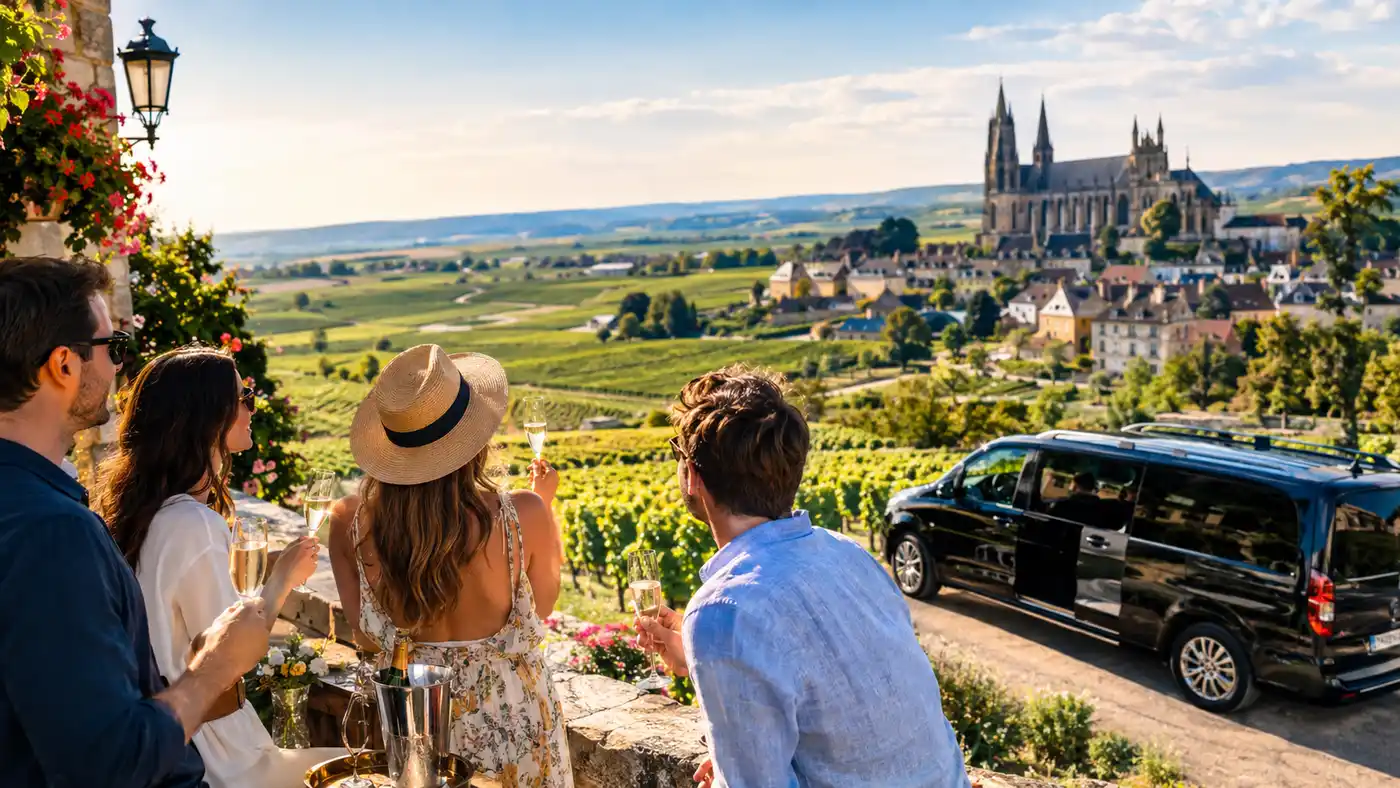
Multi Day Overnight Champagne Tours from Paris
Most visitors rush through Champagne in ten frantic hours. They wake up at sunrise, catch an early train from Paris, speed through two cold cellars in Reims, eat a sandwich on a bench, and board an evening train back to Gare de l'Est with purple teeth and a headache. Honestly, that pace ruins the region. Choosing overnight champagne tours from paris completely changes the equation. You get to watch morning fog burn off the rolling hills of the Marne Valley while the day-trippers are still waiting on the platform in Paris.
Sleeping in Champagne lets you breathe. You have time to sit down for a three-hour dinner with local winemakers, walk through Grand Cru vineyards without a tour bus idling fifty yards away, and explore deep cellars that do not accept fleeting afternoon visitors. Whether you arrange a guided excursion or coordinate your own train and driver, spending two or three days in the countryside turns a rushed checklist into a restorative retreat. Here is how to plan an overnight escape that actually does this landscape justice.
Book your champagne tours from paris experience:
Why Book Overnight Champagne Tours from Paris Instead of Day Trips?
Day tours force compromises. Because the drive or train ride consumes three hours of your waking day, standard itineraries restrict you to the big corporate houses in city centers. You see the famous chalk caves at Veuve Clicquot or Pommery, which are visually stunning, but you miss the rural heartland. Smaller independent producers - the people pruning vines, driving tractors, and making terroir-driven bottles - work out in quiet villages like Aÿ, Cramant, and Ambonnay. They do not run tours every sixty minutes. Visiting them requires appointments, flexibility, and time.
There is also the matter of pacing your palate. Tasting eight distinct champagnes between ten in the morning and four in the afternoon numbs your tongue. Acid builds up. By late afternoon, every vintage begins to taste sharp. When you stay for two or three days, you can spread four or five tastings across forty-eight hours, pairing glasses with leisurely lunches and multi-course dinners.
Evenings in the vineyards feel extraordinary. Once the afternoon buses depart, Épernay and Reims become peaceful. You can stroll down the Avenue de Champagne as the streetlights reflect off limestone facades, or sit in a village bistro where the table next to you is occupied by a fourth-generation cellar master sharing an unlabelled bottle with friends.
Pro tip: Ask for Coteaux Champenois with dinner. It is a rare, still red or white wine produced in tiny quantities across Champagne that rarely leaves the region.
Crafting Multi-Day Luxury Champagne Tours from Paris
If you prefer a seamless journey, full-service private champagne tours from paris vip experiences take the logistical weight off your shoulders. A driver collects you directly from your hotel in Paris, navigates the country lanes, and handles appointment windows at estates that remain closed to general travelers. This level of service suits travelers who want direct access to private cellars and historic châteaux without checking train timetables.
An ideal two-day itinerary divides the landscape by terroir. Day one focuses on the Montagne de Reims and its Pinot Noir dominance, starting with an early visit to a historic house before heading south into grand cru villages. You stop for lunch at an authentic country auberge, taste zero-dosage wines at a family estate, and check into your hotel by late afternoon. Day two shifts focus toward the Côte des Blancs, where Chardonnay reigns on pure chalk hillsides.
Three-day journeys allow a deeper dive into the Vallée de la Marne, where Pinot Meunier produces generous, expressive wines. You might spend an entire morning walking through vineyards with a grower who explains cover crops, soil biodiversity, and biodynamic viticulture before descending into a cellar that holds bottles from harvest years stretching back to 1988.
| Tour Style | Duration | Base Location | Tasting Focus | Approx. Cost Per Person |
|---|---|---|---|---|
| Classic Rail & Châteaux | 2 Days / 1 Night | Reims | Grandes Marques & Reims Cathedral | €420 - €750 |
| Boutique Grower Immersion | 2 Days / 1 Night | Épernay or Aÿ | Family vignerons & single-plot wines | €550 - €950 |
| All-Inclusive Luxury Escape | 3 Days / 2 Nights | Champillon or Montagne de Reims | Rare vintages, 5-star spa, private Mercedes | €1,800 - €3,400 |
Where to Base Yourself: Reims, Épernay, or the Vineyards?
Picking your base dictates the whole rhythm of your trip. Reims gives you urban scale, wide boulevards, exceptional dining, and gothic architecture. It works well if you want world-class restaurants, lively wine bars, and easy walking access to major production cellars like Taittinger and Ruinart. You never feel isolated in Reims, and train connections back to Paris run constantly.
Épernay feels entirely different. It functions as a compact wine town wrapped inside a valley of vines. Everything revolves around champagne production. If your goal is staying walking distance from grand tasting rooms along the Avenue de Champagne, this is your spot. When deciding where to anchor your trip, comparing reims vs epernay helps clarify whether you prefer cathedral city life or quiet village proximity.
For those drawn to countryside quiet, booking a rural hotel among the vines delivers an unforgettable backdrop. Here are some of the finest places to spend the night across the region:
- Domaine Les Crayères (Reims): A classical 19th-century mansion surrounded by private parkland, offering a two-Michelin-star dining room and an epic wine list with over six hundred champagne references.
- Royal Champagne Hotel & Spa (Champillon): Perched on a steep hill above Épernay, this modern resort features panoramic valley views from every terrace, infinity pools, and a Michelin-starred dining room.
- La Villa Eugène (Épernay): A former Mercier family residence set back in wooded gardens at the end of the Avenue de Champagne, retaining stained glass, rich woodwork, and quiet elegance.
- Manoir Henri Giraud (Aÿ): A boutique property focused on wellness, private tastings, and oak-aged champagnes right in the cradle of historic Pinot Noir country.
Note: Countryside vineyard hotels fill up months ahead of time for weekends between May and October. Secure reservations early if your dates are fixed.
Book your champagne tours from paris experience:
Curating the Visits: Grandes Marques vs. Grower Producers
The balance of your visits determines whether your trip feels corporate or intimate. The famous houses show you scale. Walking through Roman chalk quarries called crayères thirty meters below ground will take your breath away. These massive labyrinths hold millions of bottles ageing in silent darkness. Guides explain the assemblage process, the history of royal coronations, and the legacy of early cellar widows who created international luxury brands.
Grower producers - known locally as récoltant-manipulants - offer the counterweight. When you pull into a gravel driveway in a village of three hundred people, the person pouring your glass is often the winemaker. They smell of damp cellars and vineyard earth. They speak about specific plots of dirt, chalk depth, southern slopes, and weather disasters from three seasons ago. You see small press rooms, wooden casks, and aging rooms that fit thousands of bottles rather than millions.
I think the most rewarding multi-day journeys pair one historic icon with three or four grower producers. That contrast lets you appreciate how blending across hundreds of vineyards creates consistent house styles, while single-vineyard bottlings reflect the specific personality of one small patch of land.
Tasting fees reflect this divide. Visiting an international house with vintage pours costs between €45 and €120 per person. Visiting an independent producer typically runs €15 to €35, and that fee is often waived if you purchase three or four bottles to pack home.
Practical Advice for Overnight Champagne Tours from Paris
Timing your arrival and departure requires thought. The TGV train from Paris Gare de l'Est reaches Reims in just 46 minutes, while trains to Épernay take around an hour and fifteen minutes. If you take the train, rent a car at the station or pre-book a local driver. Taxis do not cruise village roads, and ride-hailing apps are virtually nonexistent outside downtown Reims.
Driving straight from Paris offers total freedom, but traffic getting out through the eastern suburbs can be brutal on Friday afternoons. If you drive, consider booking an automatic vehicle ahead of time, as French rental lots stock mostly manual transmissions unless requested.
- Cellar temperatures: Caves remain steady at 10 to 12 degrees Celsius year-round, so pack a heavy sweater or jacket even during hot summer months.
- Sunday and Monday closures: Many family-run estates, rural tasting rooms, and fine dining restaurants shut their doors on Sundays and Mondays. Plan your visits for Wednesday through Saturday if possible.
- Shipping wine: Most growers can arrange temperature-controlled international shipping directly to your doorstep in cases of six or twelve, saving you the hassle of lugging boxes through airports.
- Lunch reservations: Rural bistros fill with vineyard workers and locals by twelve-thirty. Walking in without a booking often leaves you hunting for convenience store snacks.
Budgeting for your trip comes down to your personal travel style. A self-guided two-day weekend using regional trains, charming three-star hotels, and independent cellar doors can be done comfortably for about €500 per couple, excluding bottle purchases. A private guided experience with a dedicated driver, five-star accommodations, and premium tastings will run north of €2,500.
Frequently Asked Questions about overnight champagne tours from paris
How many days are ideal for overnight champagne tours from paris?
Two days and one night is the sweet spot for most travelers. It gives you plenty of time to explore both a major city like Reims or Épernay alongside three or four country estates without feeling exhausted by cellar stairs and back-to-back tastings.
Can you visit Champagne without renting a car?
Yes, but your footprint will be limited to urban centers. You can take the train from Paris to Reims or Épernay and explore on foot, using local taxis for short hops. To reach quiet vineyard villages, you will need to book a guided tour, hire a private driver, or rent a car at the station.
What is the dress code for cellar visits and luxury tastings?
Smart casual is standard everywhere. Comfortable flat walking shoes are essential because cellar floors are damp, uneven, and involve steep stone staircases. Bring a warm jacket or wrap even in July, as cellars stay quite cold underground.
Is it better to stay in Reims or out in the countryside?
Stay in Reims if you love dining choices, historic monuments, and evening city energy. Choose a countryside hotel or vineyard guesthouse if you want silence, scenic terrace views, and immediate proximity to small grower vignerons.
Quick Reference
- TGV travel time from Paris: 46 minutes
- Cellar temperature: 10 to 12°C (sweater required)
- Ideal trip length: 2 days, 1 night
- Quiet closure days: Sunday and Monday
Book your champagne tours from paris experience:
Wrapping Up
Champagne deserves more than a frantic day trip sandwiched between long train rides. Taking two or three days allows you to absorb the landscape, talk with the families who tend the soil, and savor every glass at an unhurried, European pace. When you plan your trip, give yourself permission to slow down, book that long vineyard lunch, and let the real Champagne reveal itself after the crowds head back to Paris.
Read more about champagne tours from paris.